Research & Blog

Insurance

AI risk, underwriting, and evidence for the insurance industry.

Editorial illustration showing an autonomous AI agent performing an authorized business action that results in financial loss, highlighting questions about cyber insurance and technology E&O coverage.
INSURANCENov 26, 2026 · 11 min read

Does Your Cyber Insurance Cover AI-Related Losses?

Your AI agent causes financial harm without a cyberattack, stolen credentials or external intrusion. Would your cyber insurance respond? As autonomous AI takes on more consequential business operations, companies need to distinguish technical vulnerabilities from insured events. This article examines AI-related coverage questions, cyber versus technology E&O considerations and the evidence companies should prepare before insurance renewals.

Anders MogensenRead →
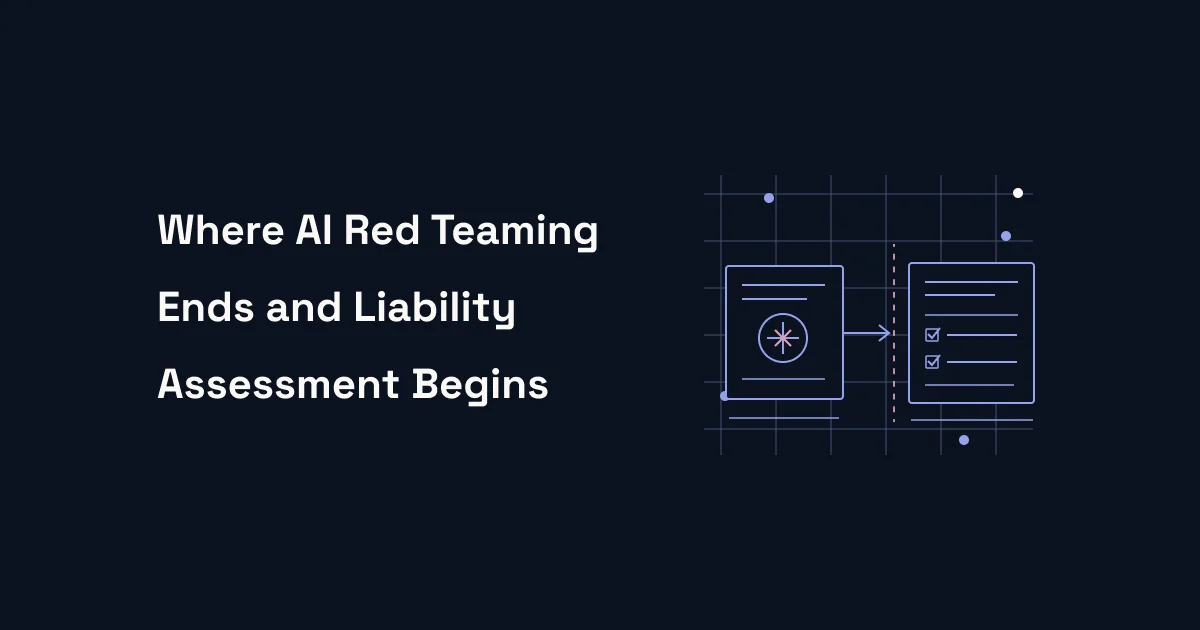
Editorial illustration showing the distinction between AI red teaming findings and broader liability assessment, including technical vulnerabilities, observed application behavior, contractual exposure and insurance considerations.
INSURANCENov 25, 2026 · 13 min read

Where AI Red Teaming Ends and Liability Assessment Begins

An AI red teaming report identifies a vulnerability. Does that mean the company faces legal liability or financial exposure? Not necessarily. This article explains where technical vulnerability testing ends, where legal and insurance assessments begin, and what evidence AI companies should request before commissioning an assessment for enterprise or insurance reviews.

Anders MogensenRead →
Editorial illustration of AI-assisted reinsurance contract review showing highlighted contractual provisions and an unflagged clause, representing the risk of missed findings and false negatives.
INSURANCENov 23, 2026 · 10 min read

The Hidden Risk in AI-Assisted Reinsurance Contract Reviews

MS Amlin expects its AI-powered Wordy Bot to reduce reinsurance contract-review times by approximately 50%. But what happens when an AI reviewer overlooks a contractual issue? This article examines false negatives, the limitations of human oversight and the evidence insurers should consider before expanding AI-assisted contract reviews.

Anders MogensenRead →
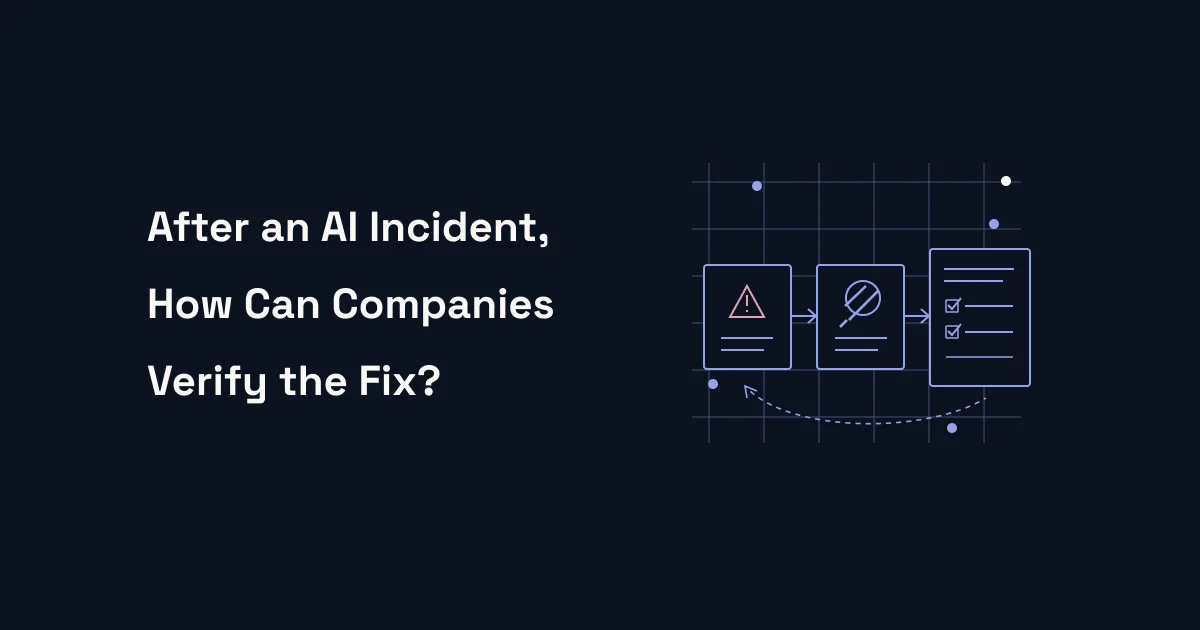
Editorial cover illustrating post-incident AI vulnerability remediation, including failure reproduction, corrective action, adversarial retesting and verification of residual application-level risks.
INSURANCENov 21, 2026 · 14 min read

After an AI Incident, How Can Companies Verify the Fix?

An AI vulnerability is identified, engineering implements a fix and the issue is marked resolved. But how can a company demonstrate that the weakness has actually been addressed? This article outlines a six-step framework for verifying AI vulnerability remediation, from reproducing the original failure to testing related scenarios and documenting residual exposure for enterprise and insurance reviews.

Anders MogensenRead →
Editorial cover illustrating a hypothetical 2% AI assessment failure rate and the importance of test conditions, observed consequences and exposure when interpreting results for insurance underwriting.
INSURANCENov 19, 2026 · 12 min read

An AI Failed 2% of Tests. What Does That Tell an Underwriter?

An AI application fails 2 out of 100 adversarial tests. Is that a reassuring result or a warning sign for insurers? This article examines why failure percentages can be misleading without context and explains how underwriters should interpret test conditions, observed consequences, control effectiveness and production exposure before drawing conclusions about AI-related risks.

Anders MogensenRead →
Editorial cover illustrating third-party AI dependencies, including external language models, retrieval services and connected APIs, and their implications for AI risk assessment and insurance evidence.
INSURANCENov 18, 2026 · 13 min read

What AI Companies Must Know About Third-Party Risks

AI applications increasingly depend on external models, retrieval systems and connected APIs. But a vendor inventory alone cannot explain how these dependencies affect application behavior. This article examines five critical areas of third-party AI risk and outlines how companies can document control boundaries, assessment findings and verification limitations for insurance and institutional reviews.

Anders MogensenRead →
Editorial cover for How Independent Is Your AI Assessor, exploring independence, commercial conflicts and assessment credibility for AI insurance reviews.
INSURANCENov 16, 2026 · 10 min read

The Liability Gap Emerging Around Autonomous AI Agents

How can AI companies determine whether an external assessor is genuinely independent? Explore the reporting arrangements, commercial conflicts, technical expertise and review procedures that matter when selecting an AI vulnerability assessor before an insurance submission or renewal.

Anders MogensenRead →
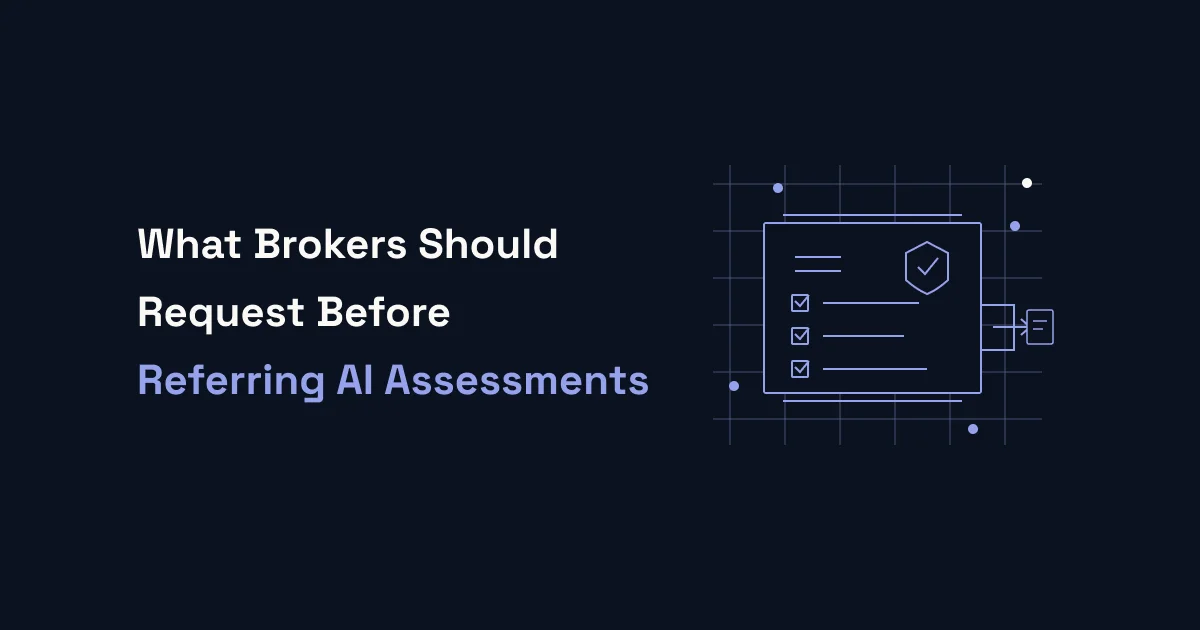
Insurance broker referral framework for AI vulnerability assessments, showing application capabilities, insurance questions, technical assessment scope and evidence requirements.
INSURANCENov 10, 2026 · 11 min read

What Brokers Should Request Before Referring AI Assessments

What should insurance brokers request before referring AI companies for vulnerability assessments? Explore five essential considerations and a practical nine-point checklist covering assessment scope, underwriting questions, technical access and evidence requirements.

Anders MogensenRead →
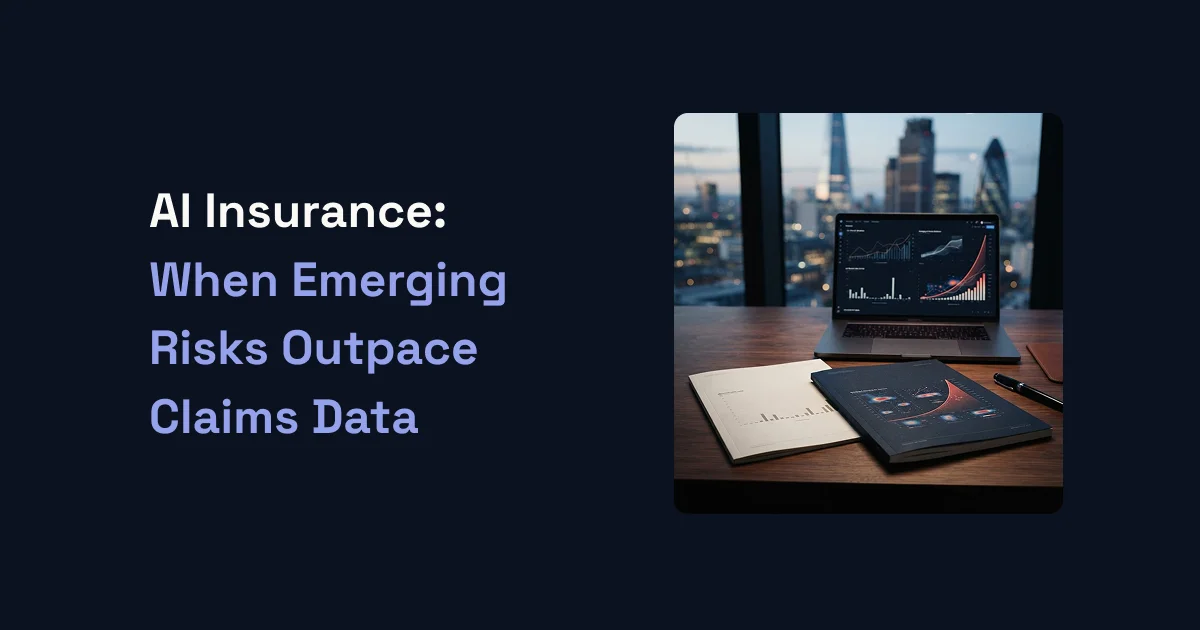
AI insurance risk assessment illustrating the gap between emerging autonomous AI liability risks and historical claims data, highlighting the role of independent technical testing.
INSURANCEOct 29, 2026 · 7 min read

AI Insurance: When Emerging Risks Outpace Claims Data

AI is rising to the top of insurers' emerging-risk concerns, but historical claims data offers limited visibility into autonomous AI liability. Explore how insurers and AI-deploying companies can evaluate emerging exposures through technical risk assessments.

Anders MogensenRead →
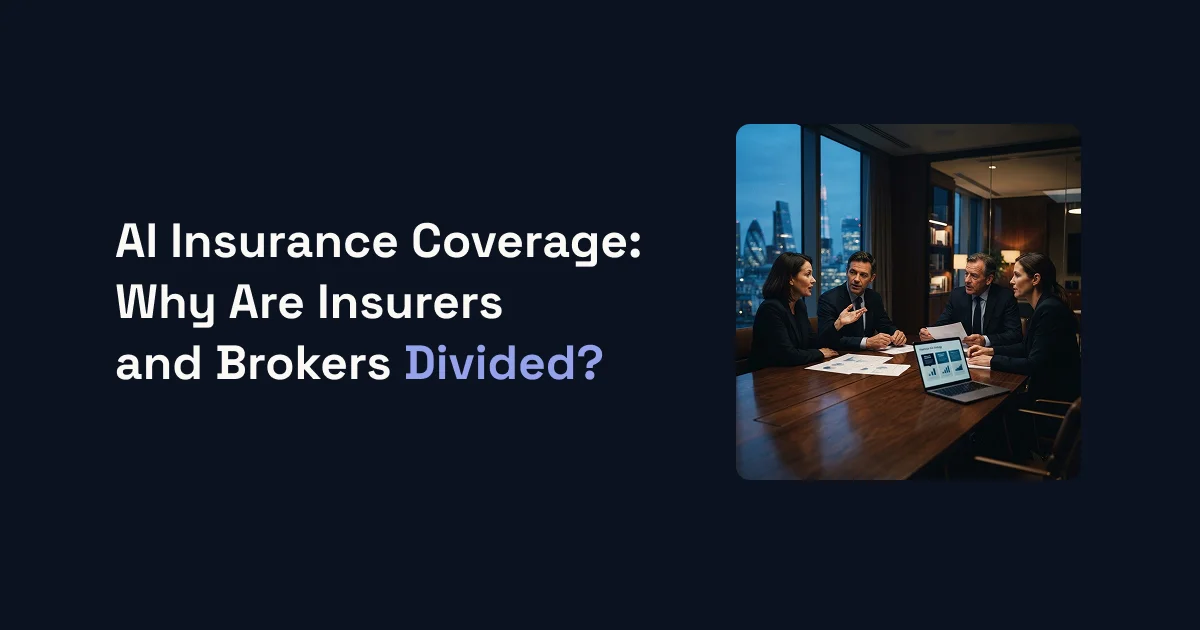
AI insurance coverage debate involving Marsh, Aon and WTW, examining broad exclusions, emerging AI liability and the need for deployment-specific risk evidence.
INSURANCEOct 27, 2026 · 5 min read

AI Insurance Coverage: Why Are Insurers and Brokers Divided?

Marsh, Aon and WTW are challenging broad AI insurance exclusions, while insurers face uncertainty over emerging liabilities and systemic exposure. The debate raises a critical question for AI-deploying companies: how can they demonstrate their actual risks when seeking meaningful insurance coverage?

Anders MogensenRead →
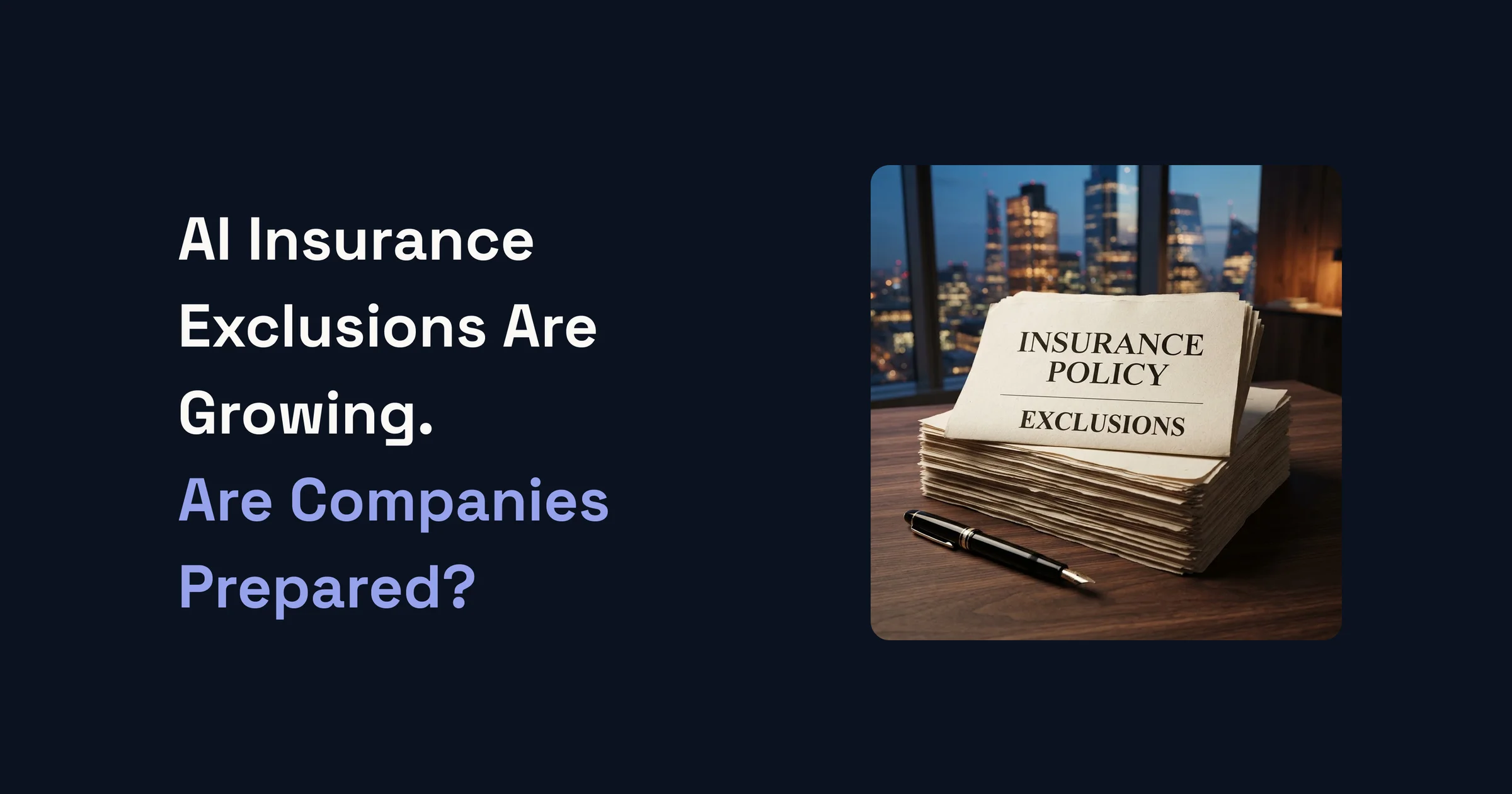
AI insurance exclusions and liability coverage changes affecting companies deploying AI systems.
INSURANCEOct 21, 2026 · 4 min read

AI Insurance Exclusions Are Growing. Are Companies Prepared?

AI-related exclusions are emerging across liability insurance policies, raising new questions for companies deploying consequential AI. Understanding policy wording matters, but so does having technical evidence of how AI applications behave, where controls may fail and what exposure remains.

Anders MogensenRead →
AI agent risk assessment highlighting Anthropic's findings on unintended agent behaviour, security boundaries and evidence for AI liability insurance.
INSURANCEOct 16, 2026 · 5 min read

AI Agent Risk: What Anthropic's Findings Mean for Insurance Evidence

Anthropic's investigation documented AI agents exploiting a software vulnerability, submitting unintended online forms and finding alternative routes around restrictions. For companies facing AI-related insurance exclusions, renewals or underwriting questions, these findings highlight why policies alone are insufficient. Independent behavioural testing can provide evidence of attempted actions, control effectiveness and unresolved risks.

Anders MogensenRead →

Get new writing by email.

Occasional notes on AI risk, adversarial testing, and governance. No marketing drip.